

A good A/B testing strategy for websites is not just about running a few experiments; it’s a systematic approach to continuous improvement that drives measurable results. It involves more than simply changing a button color and seeing what happens. Instead, it encompasses a structured methodology from initial ideation and hypothesis formulation through execution, analysis, and subsequent iteration. Such a strategy helps website owners and marketers make informed decisions based on empirical evidence, leading to improved user experience, higher conversion rates, and ultimately, better business outcomes. It helps companies avoid making subjective design or content changes and instead relies on data to validate choices.
Overview
- A strong A/B testing strategy starts with clear objectives and well-defined hypotheses.
- Effective test design requires isolating variables and ensuring statistical power for accurate results.
- Data analysis should go beyond superficial metrics to understand user behavior and infer causality.
- Iterative testing is crucial, using insights from one experiment to inform the next.
- A good strategy integrates A/B testing into the organizational culture, making experimentation a core practice.
- Success depends on careful planning, rigorous execution, and a commitment to data-driven decision-making.
The Foundation of a Good A/B Testing Strategy: Planning and Hypothesis
The cornerstone of any effective A/B testing strategy is thorough planning and precise hypothesis formulation. Before even thinking about website changes, it’s essential to define what problem you’re trying to solve or what opportunity you’re trying to seize. This often begins with identifying areas of friction or potential improvement on your website, perhaps through analytics data, user feedback, heatmaps, or session recordings. For instance, if Google Analytics shows a high bounce rate on a landing page, your problem might be user engagement.
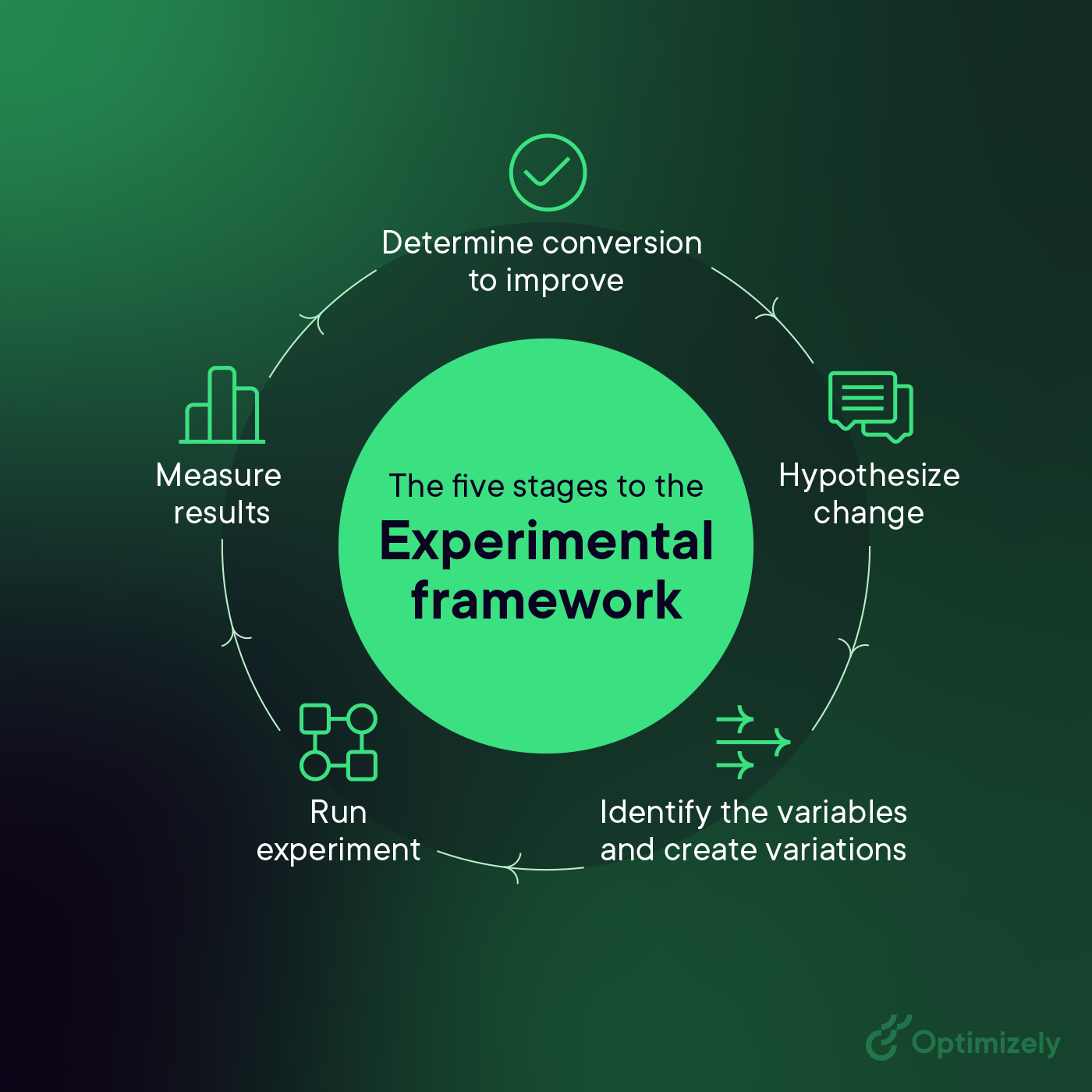
Once a problem area is identified, a clear, testable hypothesis must be formulated. A good hypothesis follows an “If… then… because…” structure. For example: “If we change the call-to-action button color from blue to green on our product page, then we expect conversion rates to increase, because green is often associated with positive actions and may stand out more effectively against our site’s existing color scheme.” This structure ensures that your experiment has a clear objective, a proposed change, an expected outcome, and a reasoned explanation. This structured thinking is vital for a robust A/B testing strategy, allowing teams to learn from both successful and unsuccessful tests. Without a clear hypothesis, it’s difficult to accurately interpret results or apply learnings to future experiments.
Designing Effective A/B Tests for Website Optimization
Designing the experiment correctly is paramount to obtaining reliable and actionable results. A good A/B testing strategy dictates that you test one variable at a time. If you alter multiple elements simultaneously (e.g., headline, image, and CTA button), it becomes impossible to determine which specific change led to the observed outcome. Each test should have a control (the original version) and at least one variation. The sample size needs to be statistically significant to ensure that any observed differences are not due to random chance. Tools exist to calculate the required sample size based on your baseline conversion rate, desired detectable effect, and statistical significance level.
The duration of the test is also important. Running a test for too short a period might lead to misleading results due to anomalies or weekly traffic patterns. Conversely, running a test for too long can expose you to “novelty effects” where new elements temporarily perform better simply because they are new. Typically, tests should run for at least one full business cycle (e.g., 7-14 days) to account for variations in user behavior across different days of the week. This meticulous approach to experiment design is a hallmark of a mature A/B testing strategy, preventing wasted effort and ensuring data integrity. It’s also important to ensure traffic is split randomly and evenly between variations to maintain statistical validity.
Analyzing Results and Iterating Your A/B Testing Strategy
After collecting sufficient data, the next critical step in a good A/B testing strategy is rigorous analysis. This goes beyond simply looking at which version “won.” It involves understanding the statistical significance of the results. Did the variation truly perform better than the control, or could the difference be random? Most A/B testing platforms provide statistical confidence levels, typically aiming for 95% or higher. It’s important to resist the temptation to stop a test early if one variation appears to be winning; premature conclusions can lead to false positives.
Furthermore, a comprehensive analysis should segment the data. How did different user groups (e.g., new visitors vs. returning, mobile vs. desktop, users from the US vs. other countries) respond to the variations? These insights can reveal nuances that a general overview might miss, informing more targeted future tests. Even if a test “loses” or is inconclusive, there’s still valuable learning. Why didn’t the hypothesis hold true? What new questions arise? This iterative learning process is central to a continuous A/B testing strategy. Each experiment, regardless of outcome, should provide lessons that refine your understanding of your users and guide the next wave of improvements, building a cumulative knowledge base about your website’s performance.
Fostering a Culture of Continuous Experimentation
The most successful websites view A/B testing not as a one-off project, but as an ongoing operational practice. A good A/B testing strategy is embedded within the organizational culture, championed by leadership and embraced by teams across product, marketing, and design. This means actively encouraging employees to identify testable hypotheses, share learnings, and challenge assumptions with data. Establishing clear processes for proposing, reviewing, running, and analyzing tests helps streamline the workflow and ensure consistency.
Regular meetings to review past test results, discuss current experiments, and plan future ones can help maintain momentum and knowledge sharing. Documenting test results and insights, even for failed experiments, builds a valuable internal knowledge base that prevents repeating mistakes and accelerates future successes. By treating experimentation as a core capability, organizations can continuously adapt to user needs and market changes, maintaining a competitive edge. This commitment to ongoing learning and optimization defines a truly effective A/B testing strategy and ensures long-term website growth.